
The Architecture Of Community
Designing Pavilions as Places for Connection
Blog /Designing Pavilions as Places for Connection
By: Gaston Rueda Tapie, Designer
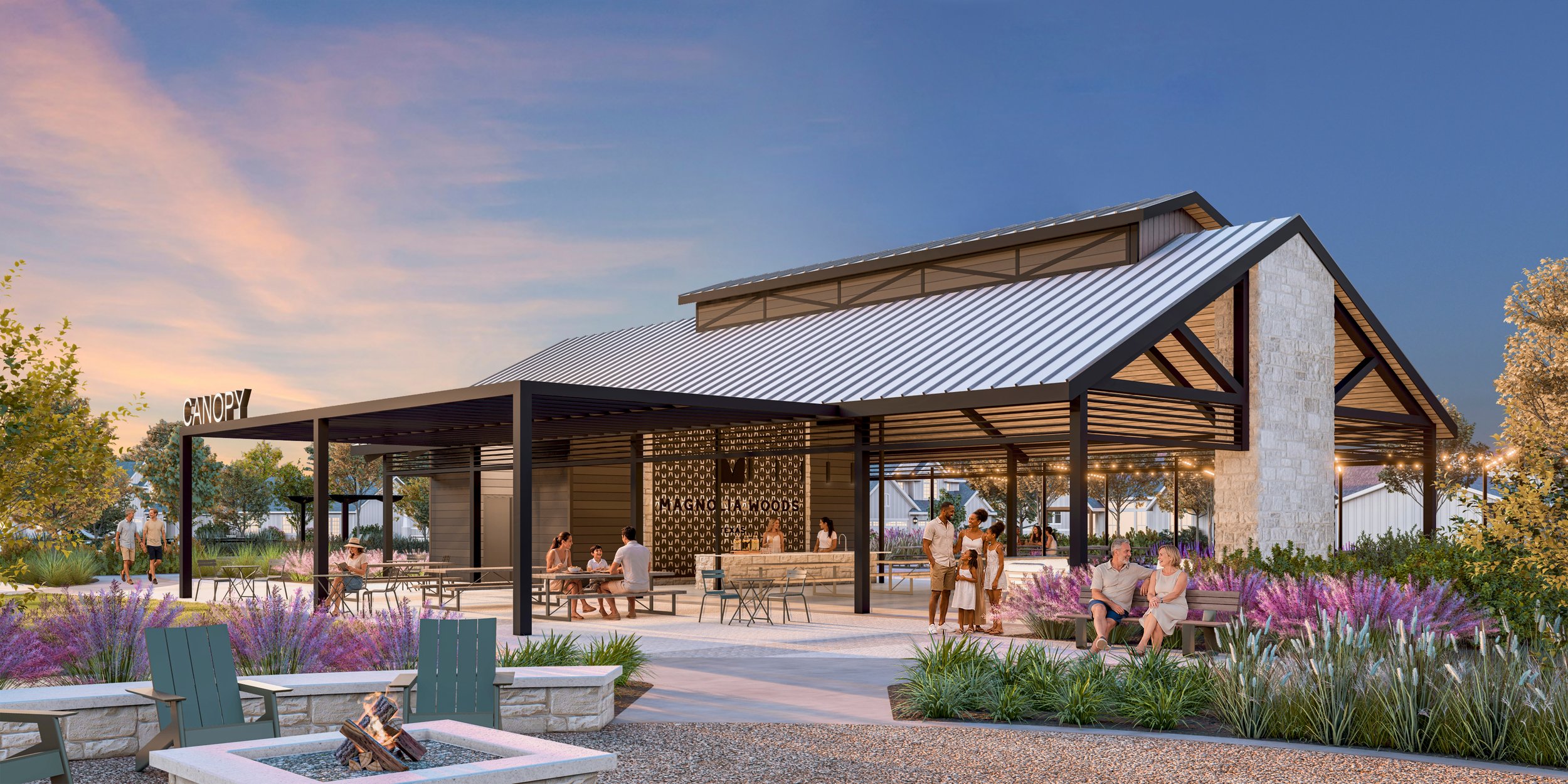
Pavilions may appear simple, but their design requires a thoughtful understanding of site, climate, movement, and community.
Unlike traditional enclosed buildings, which are often driven by interior program, pavilions are shaped by what happens around them. Their success depends on how they interact with the surrounding landscape, amenities, and the people using the space.
At Moment Architects, pavilion design is an opportunity to create a central gathering place that helps bring a larger site together.
Designing Around the Site
The site is one of the most important influences on pavilion design. Before determining form or orientation, we consider how people will move through the property, important sightlines, surrounding amenities, and the pavilion’s relationship to the larger community.
When these elements are carefully considered, the pavilion can become a natural organizing point for the site rather than simply another structure placed within it.
Environmental conditions also help shape the design. Wind direction, sunrise and sunset, precipitation, and existing landscape features can all influence orientation, roof form, and material selection.
Creating a Center for Community
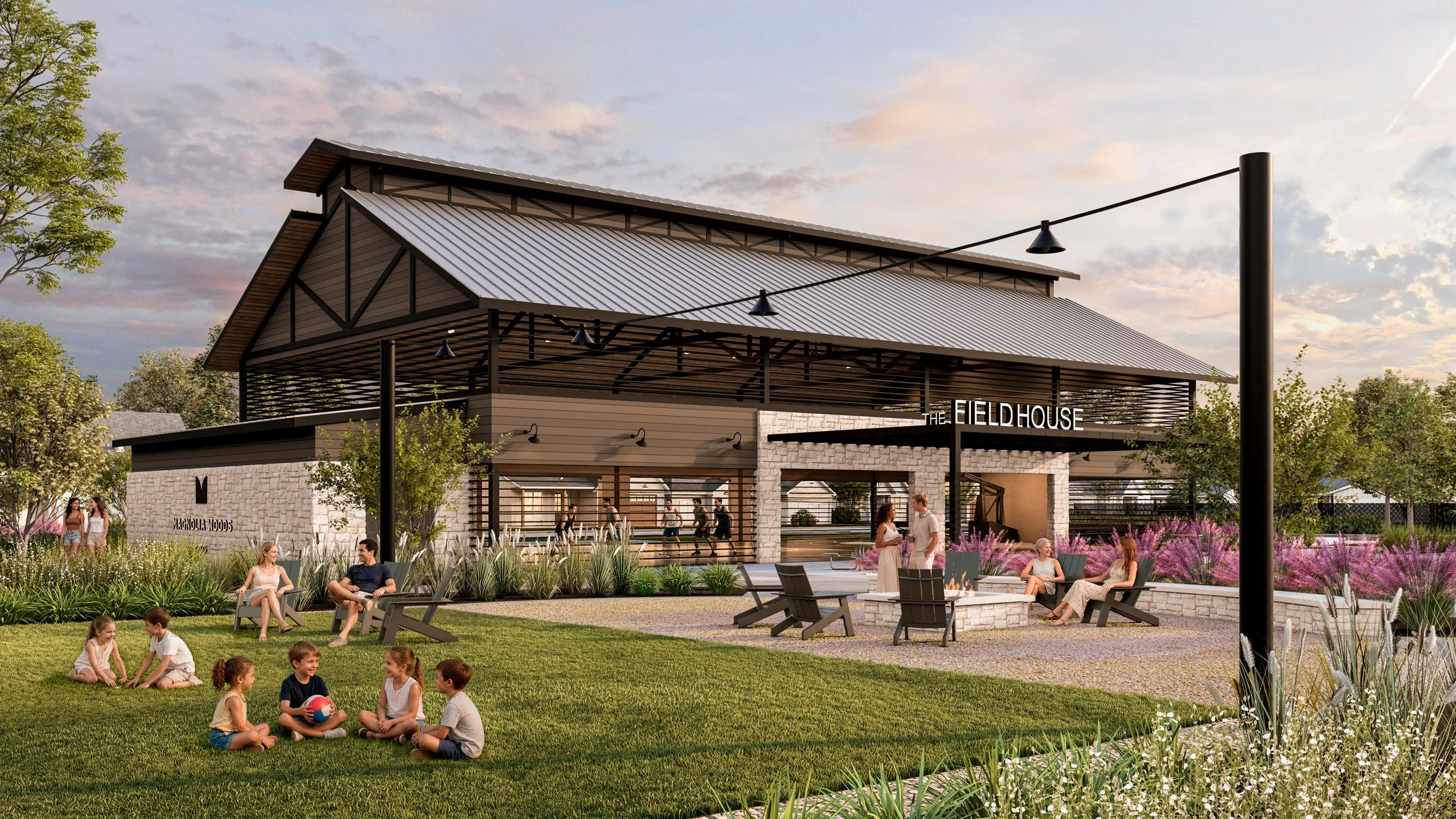
A pavilion often becomes the supporting structure for everything happening around it. Depending on the project, it may serve as an amphitheater for an open lawn, a gathering place within a park, a shaded destination near a pool, or a central space for community events.
The transition between covered and uncovered areas also helps define different activities throughout the site. Even without walls, changes in overhead cover can create a sense of structure while maintaining an open connection to the surrounding environment.
When thoughtfully positioned, the pavilion becomes more than an amenity. It becomes the heart of the space.
Responding to the Texas Climate
A well-positioned pavilion can make outdoor amenities more comfortable and usable throughout the year by providing shade, airflow, and quick shelter during changing weather conditions.
Material selection also contributes to comfort and longevity. Wood and stone can help ground the structure within the landscape, while durable structural systems such as metal framing can support long-term performance.
Lessons from Magnolia Woods and Dewberry Hills
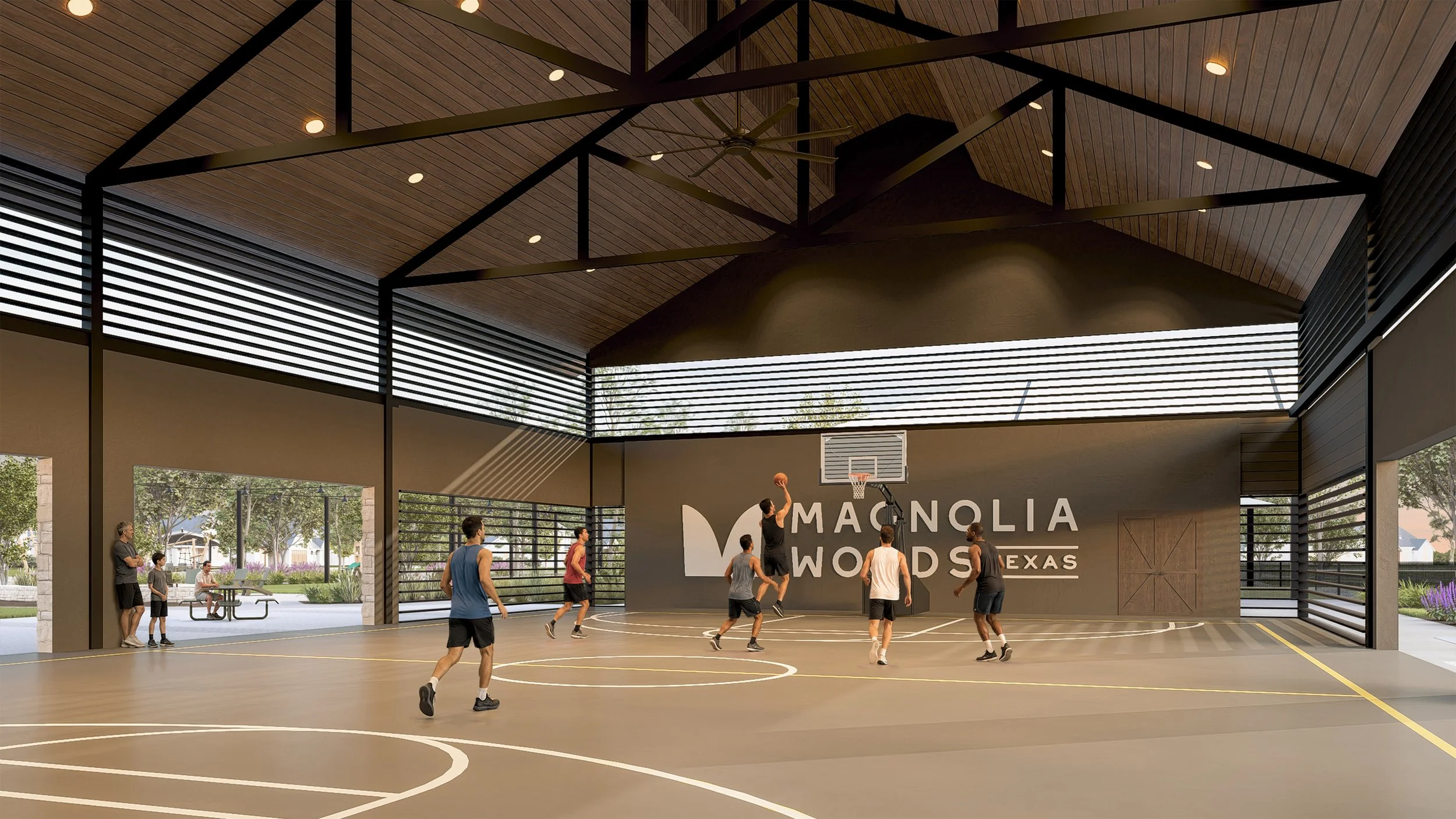
Recent projects such as Magnolia Woods and Dewberry Hills have reinforced the importance of placemaking within pavilion design.
At Dewberry Hills, one of the primary challenges was positioning the pavilion so it could connect several amenities within an already-developed site. By carefully organizing the restroom block, roof coverage, lawn, park, and pool areas, the pavilion became a central element that tied the recreational spaces together.
These kinds of decisions show how pavilion design is not only about creating shelter, but about organizing activity and strengthening the relationship between people and place.
Designing a Place to Gather
Successful pavilion design is ultimately about connection.
A pavilion must respond to its site, climate, amenities, and community while remaining flexible enough to support different activities over time.
When these elements come together, the pavilion becomes more than a structure. It becomes a place to gather, celebrate, relax, and connect.